

Driving in Wisconsin feels like cruising through Eden. It is unimaginably green given the heat-wave summer. There are fields of corn and clover blossoms and Queen Anne’s lace; in the temperate evenings, fireflies trace and weave star-trails between cottonwood trunks. Everyone we meet is generous, warmhearted, ready to show us the meaning of “Midwestern nice” one free beer at a time.
In those halcyon environs, the data centers land like a spaceship crash.
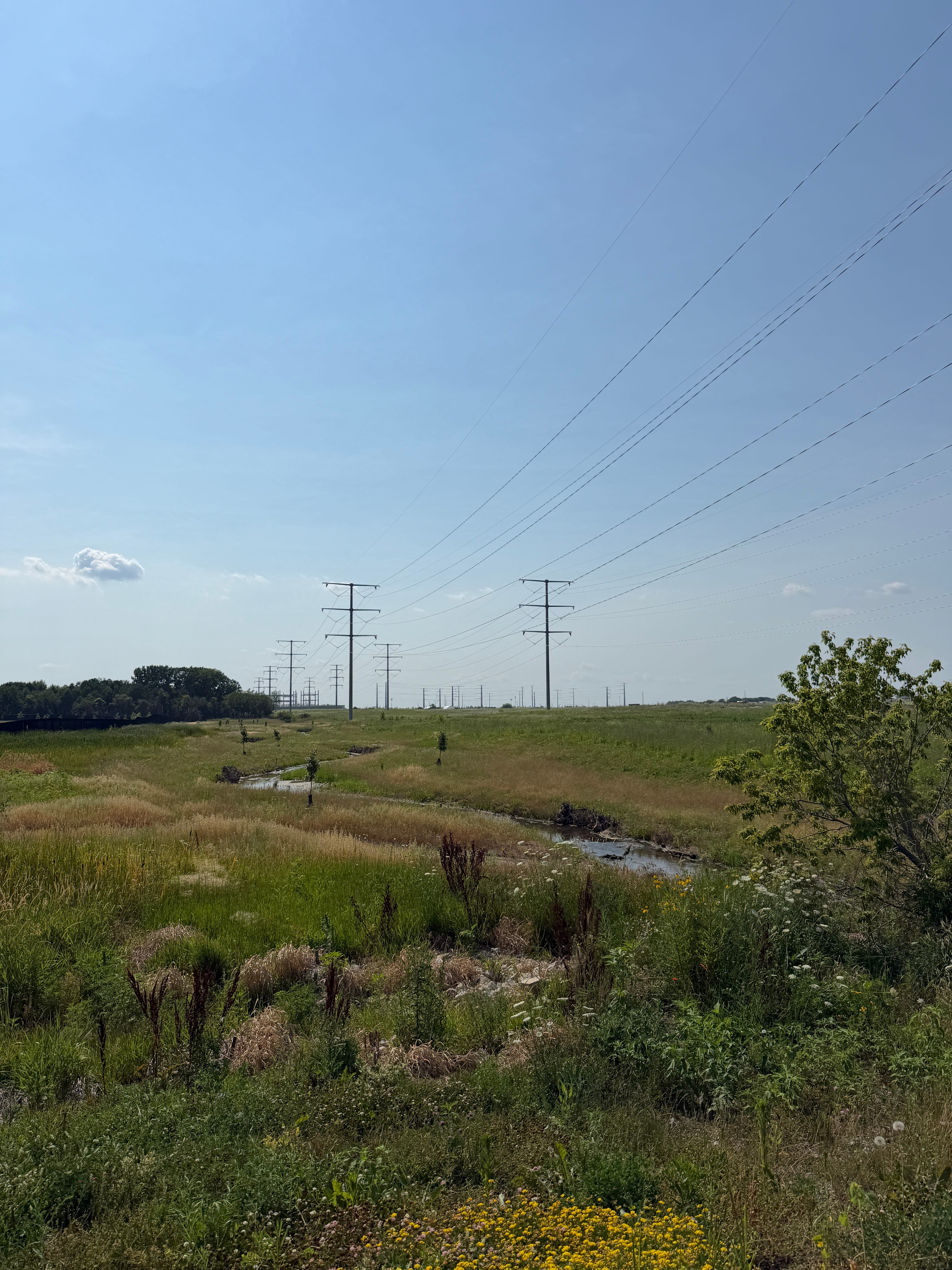
Data centers are the most visible, physical manifestations of the AI boom. For a technology that we think of as immaterial, existing only in “the cloud,” a hyperscale data center—often spanning hundreds of acres of land—is impossible to ignore. Inside these behemoths live the chips and servers that train new AI models and process user queries from apps like ChatGPT. To perform such complex calculations at lightning-fast speed, data centers require an enormous amount of electricity, so they often come ensconced in a web of new transmission lines. Data centers don’t look cyberpunk, solarpunk, or otherwise inspiringly futuristic. They are just greige.
When I visited DC in February to start researching the brewing AI backlash, I found that the top two uniting issues were kids’ safety and data centers.1 These were very different concerns from those I hear in San Francisco—a city with no kids and no data centers—which preoccupies itself more with fears of strange, self-propagating machine species, or the more workaday concern of your startup running out of cash.
Through the spring, I watched digital maps light up with proposed data center sites, then proposed moratoriums. Viral videos showcased protesters dragged out of city meetings, or residents whose tap water suddenly ran brown. More Perfect Union blamed AI companies. OpenAI blamed China.2 Polls indicate that Democrats and Republicans are matched in detesting data centers: roughly 30% for, 70% against. Comedian-turned-activist Charlie Berens called data centers “the most bipartisan issue since beer.”
I still felt that I did not really understand the data center backlash, and was slightly skeptical of the one-sided national news. New closed-loop cooling systems use about as much water as a golf course. Factories and power plants are just as ugly and much more polluting. Construction opposition is usually highly localized—build it, just somewhere else—so what made data center activism such a nationwide phenom?
The only solution seemed to be hitting the road, going to the towns where data center fights were happening, and talking to as many people as I could: activists, yes, but also workers, planners, politicians, and residents. I wanted to learn: Do most people actually care about data centers, or just a passionate few? What’s motivating these revolts—is it about AI, or energy costs, or good old NIMBYism? How did local opposition become a national issue? And how is AI moving elections?
On July 13, I packed my bags and flew to Madison, the trailhead for my 10-day, 4-site data center adventure in the upper Midwest. Three friends and co-researchers joined me for the trip. It’s worth noting that Wisconsin and Michigan are not exactly data center central, as they rank in the upper-middle of the pack.3 But what these states offer is a unique lens on how data center fights intersect with battleground primaries, industrial history, and residents’ deep attachment to the land.
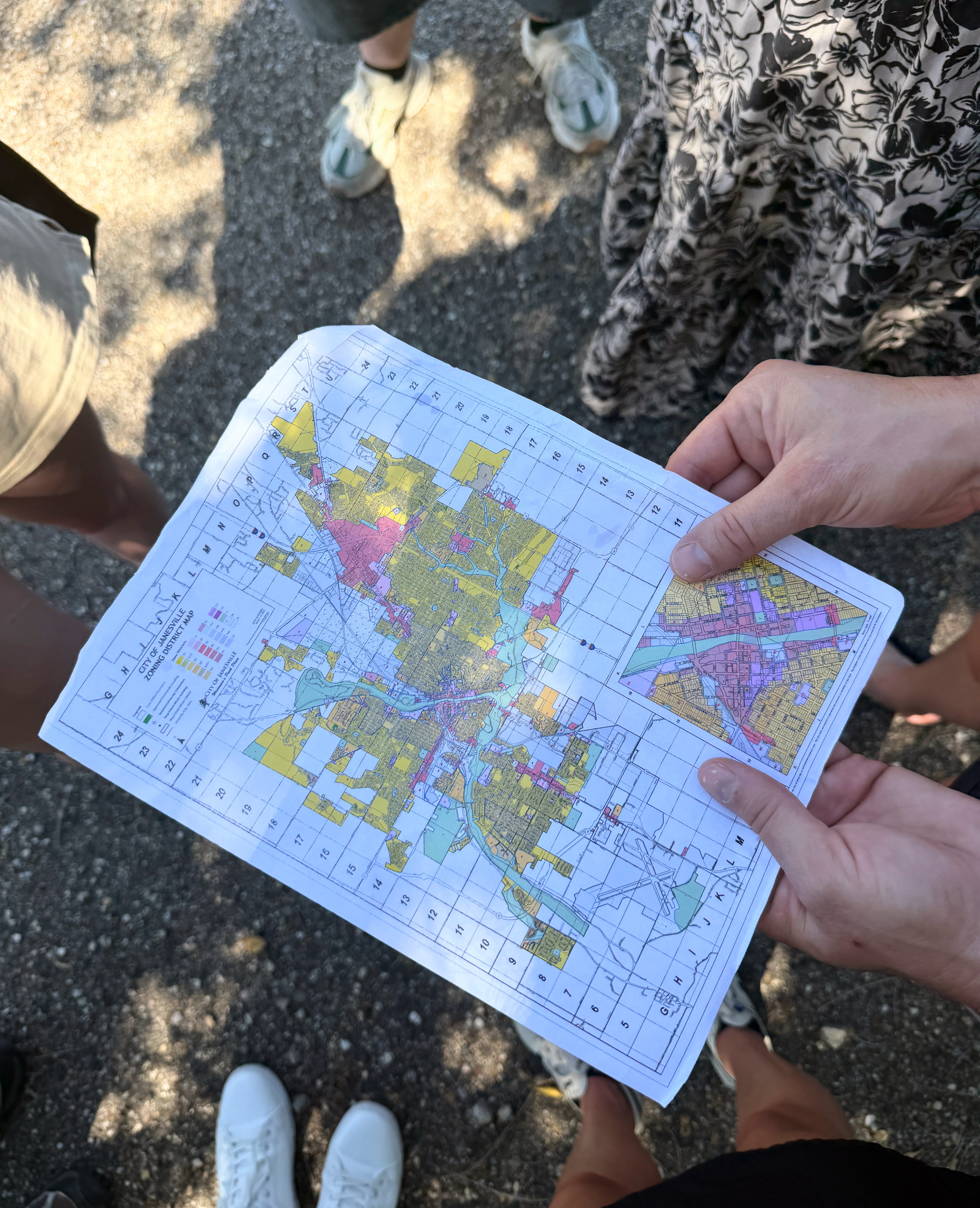
Our first stop was Janesville. The city crossed my radar via the 2017 book of the same name, which chronicled the community’s struggles after a 90-year-old GM plant closed in 2008. The whole city—about 64,000 people—had been built around auto manufacturing. And since 2008, the old GM/JATCO site has remained unused, a derelict 250-acre lot in the middle of town.
It used to be Adam Shultz’s job to find a buyer for the empty parcel. Adam—who calls himself “a dealmaker at heart”—is a commercial real estate broker with Coldwell Banker and an ambassador for Forward Janesville, the local economic development group. Adam grew up in Rock County. He had family who worked at GM. And for five painful years, he had a hell of a time trying to sell the site.
The main deterrent is the hazardous waste in the soil: heavy metals, hydrocarbons, and an unknown cocktail of forever chemicals produced by decades of industrial operations. After they went bankrupt, GM never finished cleaning it up. Two hundred prospects reportedly turned down the brownfield due to contamination.
So when Adam heard that the data center developer Viridan Partners was interested—and that they’d cover the $30 million cleanup, plus contribute an estimated $4.8 million a year in taxes—it sounded like the best deal Janesville was ever going to get.
“People have pitched fairgrounds, or housing, or wouldn’t it be great if restaurants were down there? But our retail corridors struggle to fill vacant retail buildings, so they’re not going to go to a buried area of town that’s formerly heavy industrial,” Adam explained. He knew the data center proposal was getting pushback, but he found the opponents frustratingly unrealistic.
“We will have a data center down there, or we will have a giant slab of concrete. The numbers make no sense to anybody other than this industry.”
The GM/JATCO site is a five minute drive from Janesville’s downtown corridor. It’s exactly what Adam billed it as: a giant concrete slab with an old rail line running through, overgrown with weeds, and baking in the 90-degree July sun.
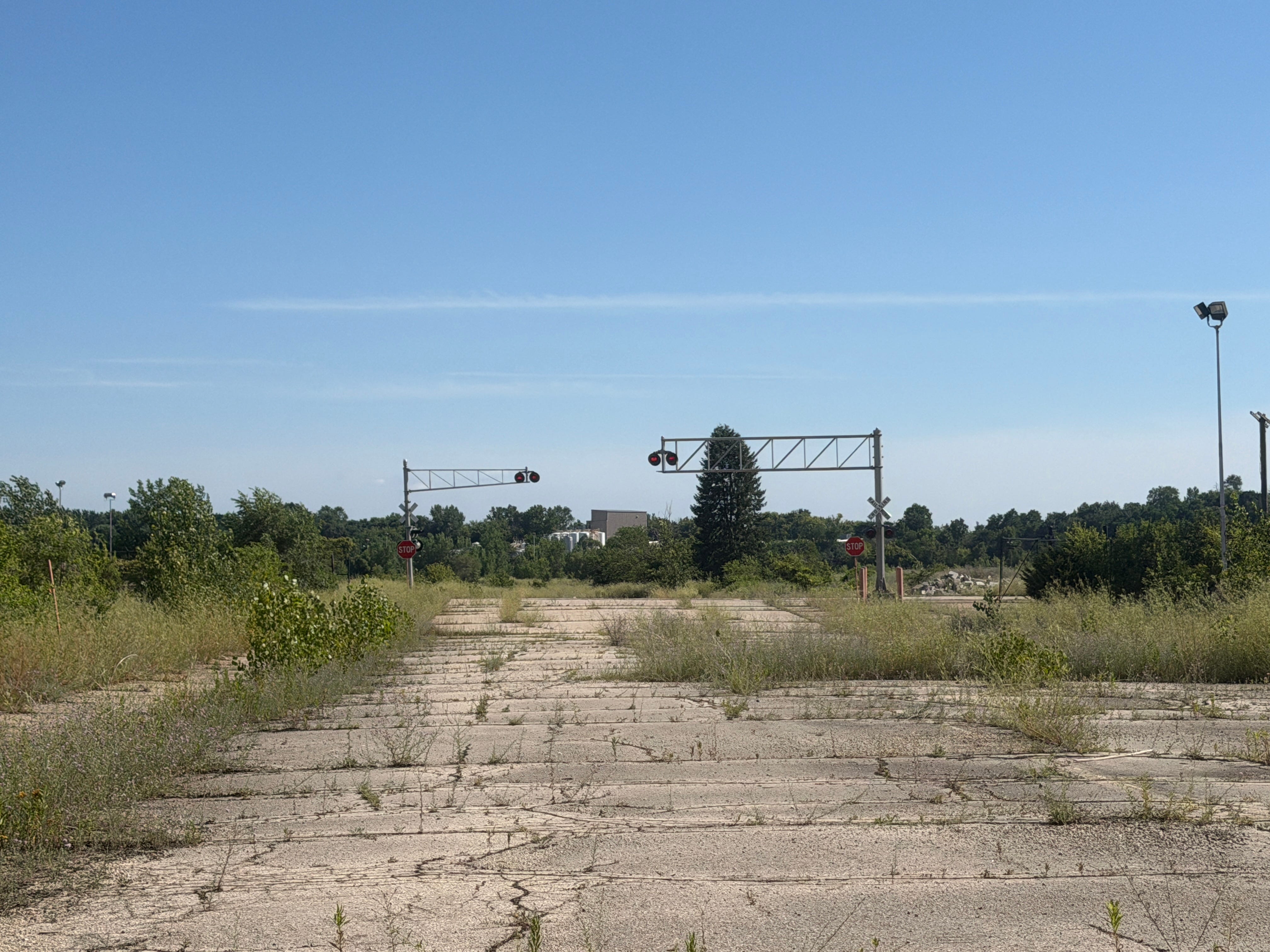
Three volunteers with the No Janesville Data Center effort met us there. Alyssa Capozziello is a disabled mom who resolved last year to become more engaged in her community. Kaycee Peterson, lean and ponytailed, is finishing her bachelor’s in environmental science. Cathy Erdman is a local organizer and firefighter who just returned from a vacation to Mongolia.
The three activists are feeling victorious: the day prior, they got a ballot placement for a referendum requiring voter approval for future developments exceeding $450 million. The city’s letter of interest with Viridian expired in June. A few months before, they pressured the Janesville city manager into resigning, and elected one of their own organizers onto city council.
Alyssa and Cathy had first learned that Janesville was courting new development when an RFP showed up last July. But they were furious to learn that the city’s discussion with data center developers had begun a year earlier, under NDA. Everything about the arrangement seemed shady: the secrecy, the tax incentives, the $1380 bill they got served for a public records request, Viridian’s marketing presentations at council.
“Small communities don’t have the legal budget to negotiate well. You’ll never hold a company to a contract,” said Cathy, who feared Janesville once again tying itself to a single big employer—especially one in a “high-risk industry” like AI. City officials were promising to lower wheel and property taxes on residents, but that assumes everything goes right. What if the project gets abandoned? How does Janesville avoid “another GM plant scenario”?
Kaycee, meanwhile, has been reading academic articles to understand data centers’ effect on local aquifers. She joined Alyssa and Cathy after finding them on Facebook. “I want to see the long-term impact studies done before you just start building these all over the place, instead of just throwing them up and then worrying about the damages later,” Kaycee said.
And Alyssa is perturbed by the idea of a data center so close to Janesville’s underserved neighborhoods. “They’re coming to one of the poorest counties in our state, with a property that’s been vacant, knowing that people are thirsty to have development here,” said Alyssa. “If you look at where data centers are being built, it’s not in Mark Zuckerberg’s backyard. It is in hardworking Janesvillians’.” In August, she plans to vote for Francesca Hong, the democratic socialist hoping to win rural red voters through a data center moratorium—and as of recently, Wisconsin’s Democratic frontrunner for governor.4
I ask the three what they envision being built here instead, but don’t get much of an answer. I suspect that Adam is partly right—maybe this is a choice between a hyperscale data center and a concrete slab. And Alyssa, Cathy, and Kaycee would rather pick the slab.
Like the Janesville site, Mount Pleasant’s data center sits on storied ground. For a moment in time, during Trump’s first term, the village was supposed to herald the revival of American manufacturing. Now, it hosts several gigawatts of Microsoft compute.
In 2017, the Village of Mount Pleasant, Racine County, and State of Wisconsin offered over $4 billion in tax incentives and infrastructure investments to win a bidding war for a Foxconn plant. In return, Foxconn promised Mount Pleasant—population 26,000—a $10 billion investment that would create 13,000 jobs making flat-screen TVs. The village eminent domained the land and prepared infrastructure. But Foxconn kept downsizing their plans, citing high labor costs. By the end of 2024, just over a thousand jobs had been created. Mount Pleasant was saddled with over $183 million in debt that Foxconn and Microsoft are still servicing.
The memory of the Foxconn fiasco is still raw. We heard it referenced in conversation after conversation as a flaming symbol of corporate failure.
Mount Pleasant’s government tried to learn from their mistakes. In 2023, Microsoft purchased part of the Foxconn site for $50 million. This time, the village negotiated a tax guarantee and did not perform new borrowing, infrastructure spending, or subsidies. It avoided an NDA, which had amplified dissent with Foxconn, and held upwards of sixty public meetings discussing the Microsoft development since its kickoff. (The village said most were empty until the data center backlash went national last year.)
If any data center project should have gone down easy, it should’ve been Mount Pleasant’s. The infrastructure and associated debt was all already there. Microsoft is on track to pay $19.7 million in taxes in 2026. A major new development was the only way to maintain “public services like policing, road paving, and emergency medical services,” said Sean Ryan, a village representative. “Data centers can accomplish that on an unprecedented scale.”
But even more than the GM closure in Janesville, Foxconn taught many residents to never believe a tech company’s—or their local government’s—sweet-talking ever again. Yes, they might pledge jobs or infrastructure or taxes. Their PR teams know what words to say. But they can write carve-outs into the contract; they’ll go unpunished if they leave. And in that world, if it goes away, then it’s your land, your community, and your already-strained municipal government that gets left holding the bag.
To hear the skeptic’s side, we met Prescott Balch and Sarah Zarling at a dive bar near Mount Pleasant. The two make a funny pair: Prescott a conservative, soft-spoken retired US Bank executive, and Sarah a vivacious and slightly distractible environmental advocate in a neon pink dress. In a world without data centers, they might never have met; today, they are representative of the strange bedfellows that the data center opposition has created.
Neither lives in Mount Pleasant (in fact, Prescott made his name scaring Microsoft away from neighboring Caledonia5), but they have both become something like full-time activists. Now, they spend their time traveling from town to town, coaching different communities on why and how to stop a data center.
Prescott hated the idea of a data center in Caledonia as soon as he heard it. “I live in paradise,” Prescott stressed. “If you drive from Milwaukee to Chicago straight down the highway, we are the last little bit of open space in that 90-mile stretch. So if somebody comes along and says, we’re going to pave it over with a data center, that sounds bad right out of the gate.”
Though Prescott had no prior political experience, he did know finance—and started researching the specific tax incentive districts that many Wisconsin cities were using to attract data centers to blighted areas. Prescott argues that data centers in TIDs are almost always a bad bet, and can end up raising taxes on residents, especially if developments end up smaller than planned. His website hosts a veritable library of homemade blog posts and slide decks, complete with spreadsheets, napkin math, and case studies galore.
Unlike many activists, Prescott puts his critique in language that governments grok. This makes him especially valuable to fellow resisters. “It’s our elected officials’ job to understand this, and they don’t,” Prescott said. “And I feel half crazy, because I figured it out in a few months. You’re bad at your job if you let this happen.”
Sarah then offered to take my group on a drive-by of the Microsoft data centers: Fairwater 1, which is already operational, and Fairwater 2, which is under construction. The sites are sprawling. Hyperscale data centers are too heavy and fragile to build vertically, so the buildings are big and flat and seem to go on forever. Opponents time how long it takes to drive past one at highway speed (1 minute 42 seconds for the Port Washington site). Cranes lean and dangle boxes like fishing poles. On fences hang banners for the construction group: Plan the work! Work the plan! Stay safe! WALSH. It feels like being in a real-life Minecraft game.
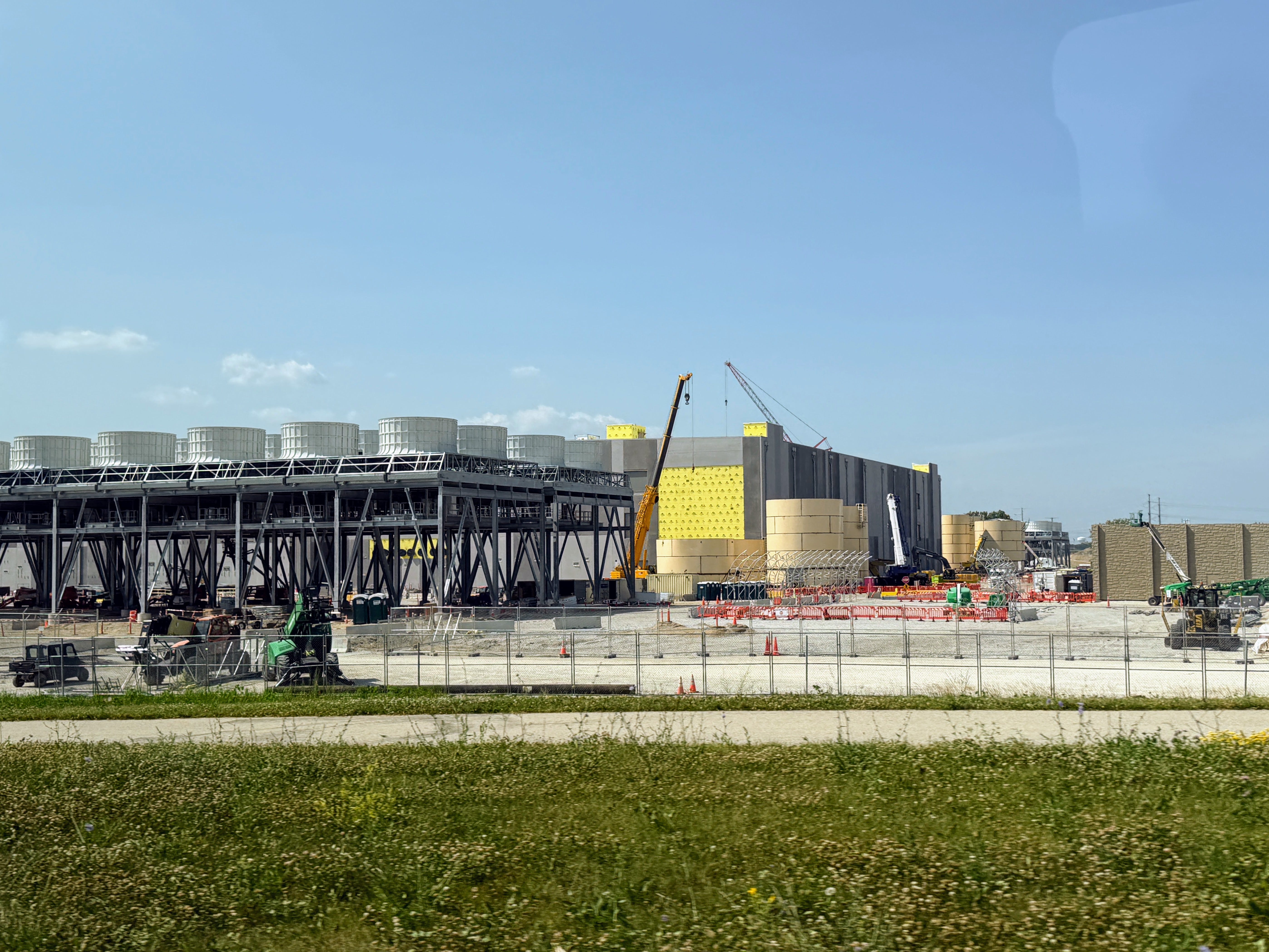
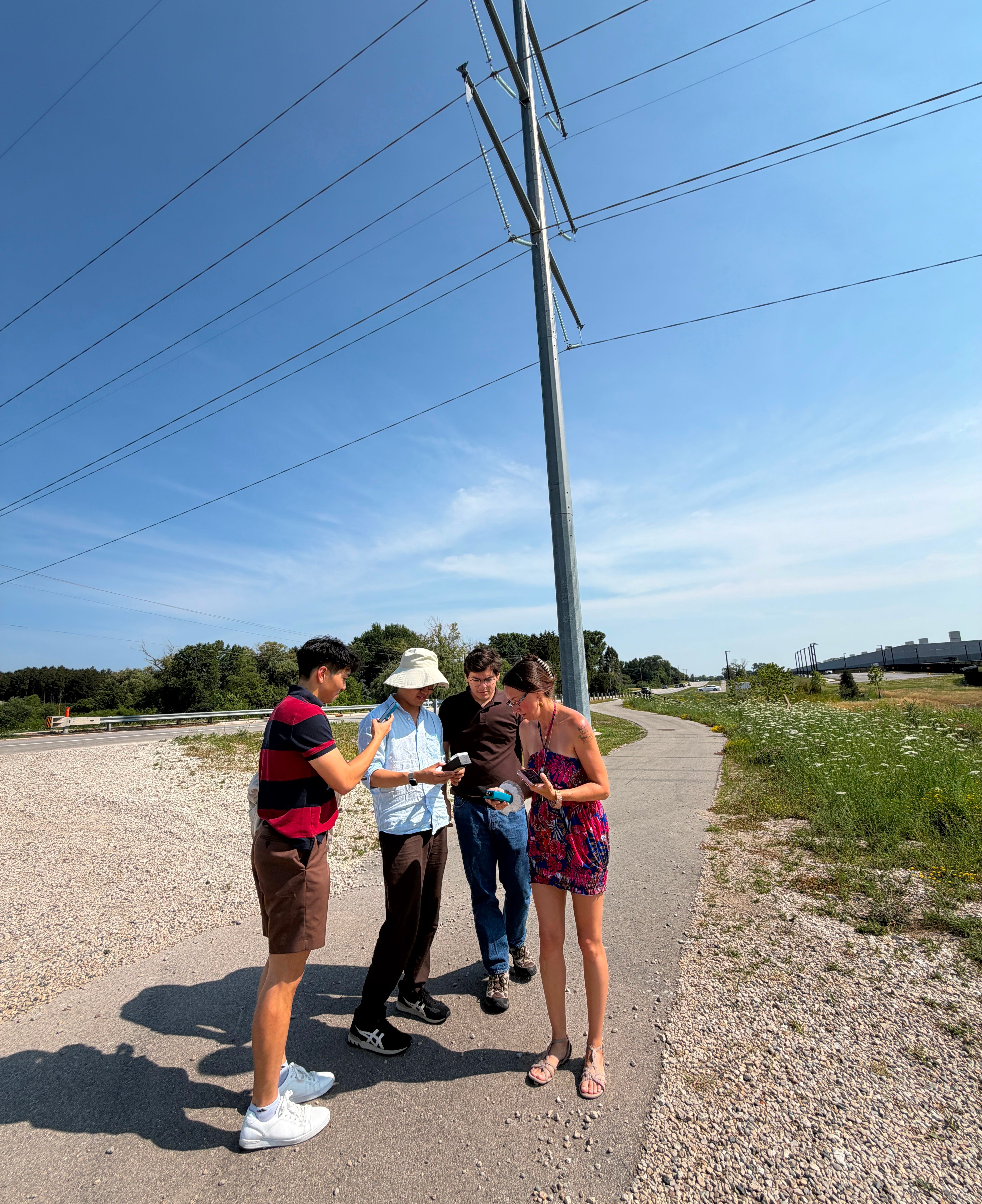
Some Mount Pleasant residents have made noise complaints, so Sarah brought devices to measure the sound levels and electromagnetic field around the data center. We pull over on a patch of gravel and step outside the site.
“Stay on the sidewalk,” Sarah commanded. “Otherwise they’ll tell us we’re trespassing, but this is public land.”
We took out the gadgets and squinted at the readings under the pounding sun. The sound meter measured 67 decibels, comparable to a lively conversation. The EMF reader is shakier, going haywire under the crackling power lines, then settling down a few steps away. There’s an adrenaline rush to the whole endeavor: doing citizen journalism, gonzo environmental impact studies, sneaking around where you’re not supposed to.
The data center movement is full of “accidental activists” like her and Prescott, Sarah remarked. “It’s regular people who all of a sudden realize that they have this horrible thing being thrust upon them, and say, we want to do something.”
But not everyone is losing out from the data center boom. Just ask any of the earthmovers, HVAC engineers, electricians, or crane operators earning six-figure salaries working on data centers.
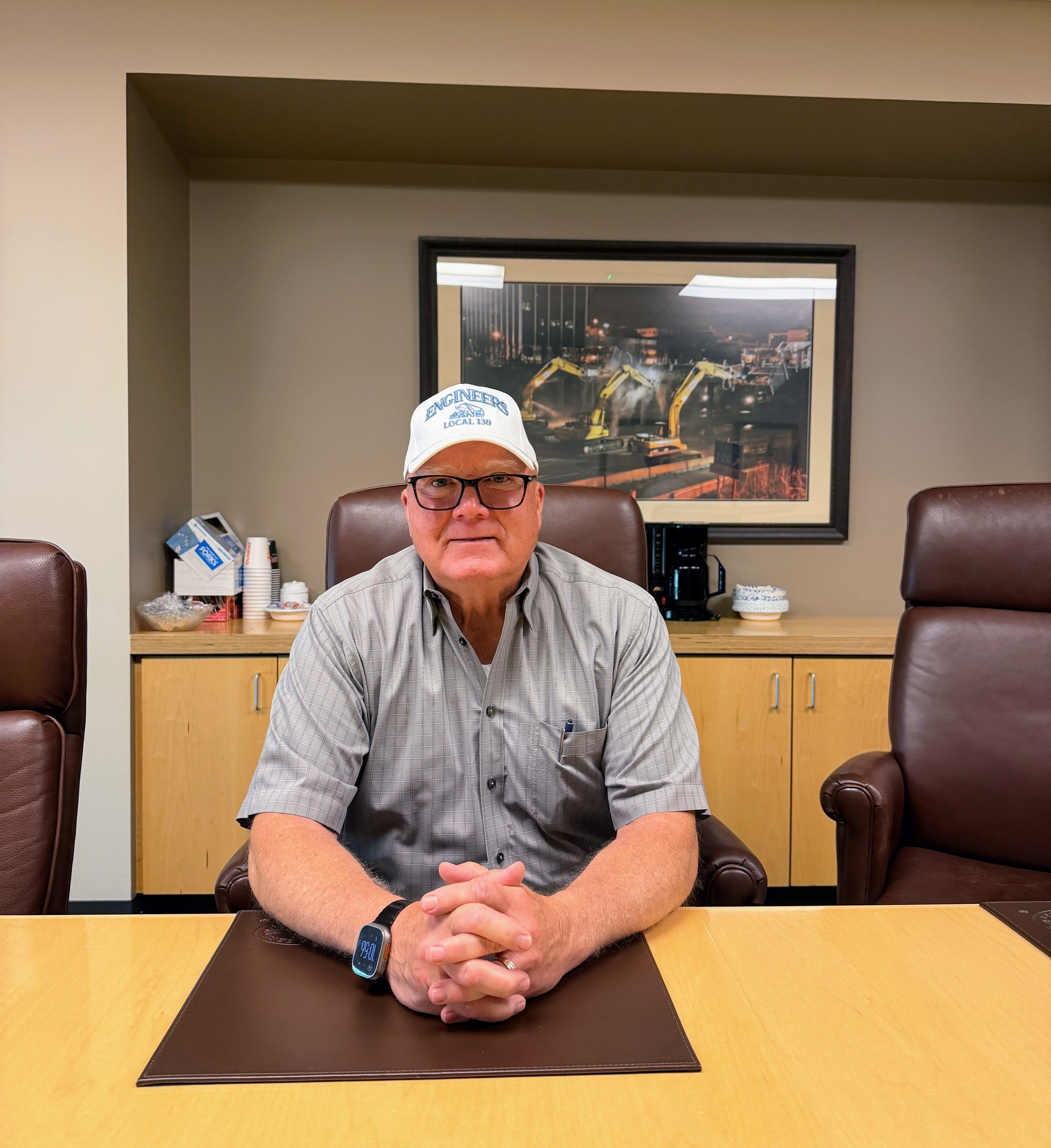
Terry McGowan began his career in the trades at age 14 at an excavating shop in Lannon, where he changed truck tires and shoveled the garage. Today, he is International Vice President for the IUOE, business manager for Local 139, and owner of a contact book full of power brokers, from Wisconsin lieutenant governor Sara Rodriguez to US transportation secretary Sean Duffy.
“When I was a young man, noise was money,” Terry told us. “Milwaukee just revered these huge, massive industrial factories, because this engine is paying our bills, sending our kids to school, feeding us, housing us. A lot of those foundries had furnaces. The emissions that would come out, the slag that would come out, the oil in the machine shops, it was all pollution.”
“Now data centers are like public enemy number one to many of these people. And it’s clean technology!”
For Terry’s guys, business has never been better.6 Data centers and solar fields have together been a “windfall” for the building sector. Each project requires thousands of skilled workers during the two to six year construction period (nearly 10,000 in Mount Pleasant), then a few hundred for maintenance during operation. Because of labor shortages, developers are dangling $100 cash per diems at workers to entice them into projects and prevent them from going to competing sites. IUOE’s apprenticeship program—paid for with $1.35 an hour from each member’s wages—has doubled its class sizes from 600 to 1200 in the last two years. It’s not as much permanent employment as a factory, but a far cry from the “jobs myth” that opponents assert.
“Everyone wants to be a heavy equipment operator now,” he laughs. “For once, the white collar people are going to start losing their jobs first.”
Terry recalled how the UAW failed to negotiate over letting robots into some auto plants, getting their members cut out of the newer automated factories. “It takes a lot longer to get yourself back inside than if you’d have just stayed and worked with what you had,” he sighed.
So he now spends his time negotiating industry contracts to ensure his workers ride along with the AI wave. “Now, if autonomous equipment comes on the job site, my guys oversee the operations, my guys do the maintenance, my guys supervise,” he insisted. “I don’t care if they’ve got to count paper clips in the middle of a construction site. They’re going to be there.”
Union density in Wisconsin has fallen from 21 percent in 1989 to 6 percent in 2025, but this conversation makes me wonder what has been lost. Most workers in America today, and most who are vulnerable to AI displacement, don’t have organized representation. In an age of accelerating disruptions, it sure would be nice to have a guy like Terry on your side.
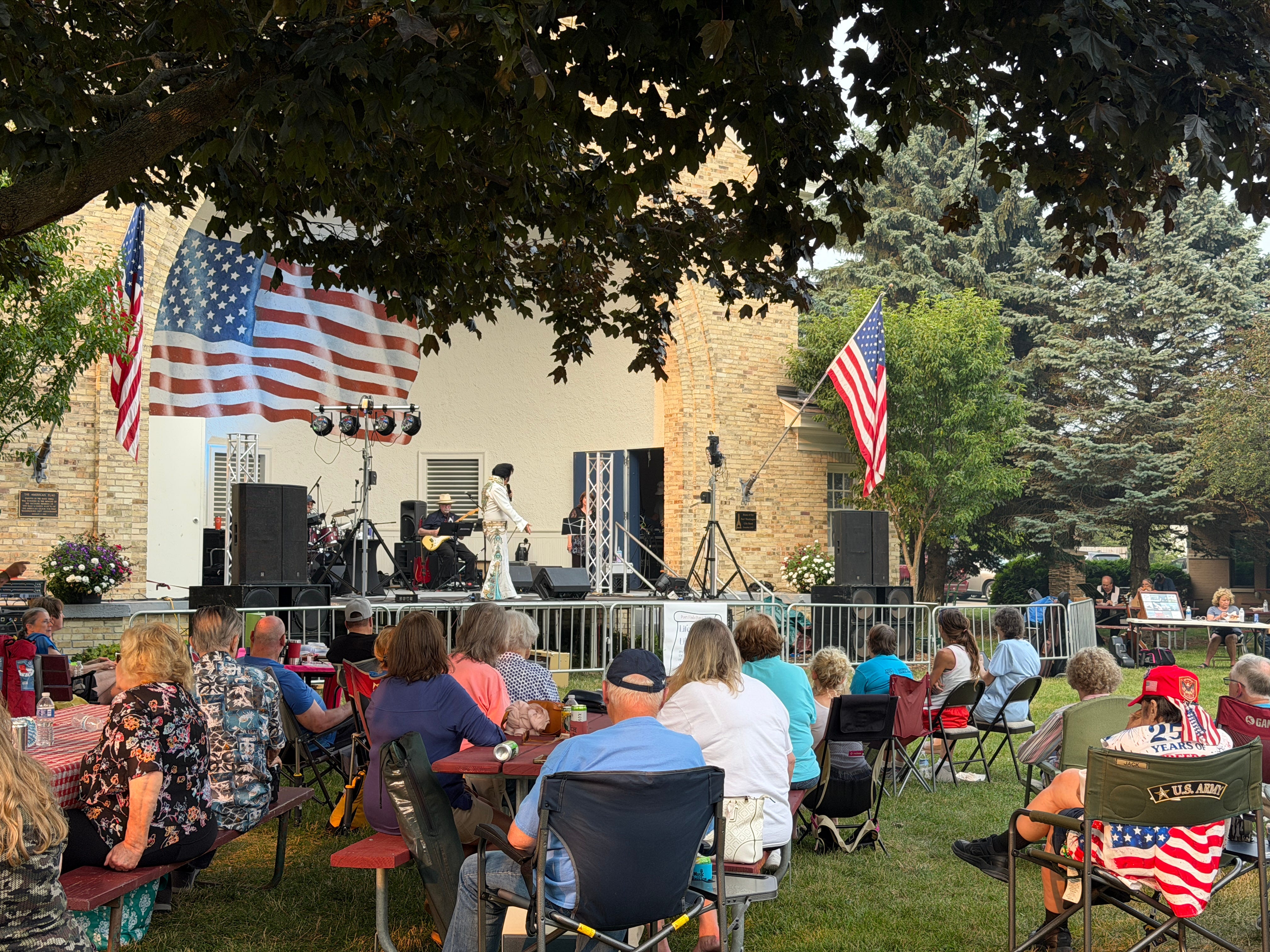
Today is Fishgiving, the first night of Port Washington’s annual Fish Days festival. A longtime resident told us it used to be a one-day blockbuster affair, but was spread out to three to limit crowd sizes during Covid—a decision some Port residents still grudge as unacceptable state overreach. Appropriately, this year’s theme is “Life, Liberty, and the Pursuit of Fish.”
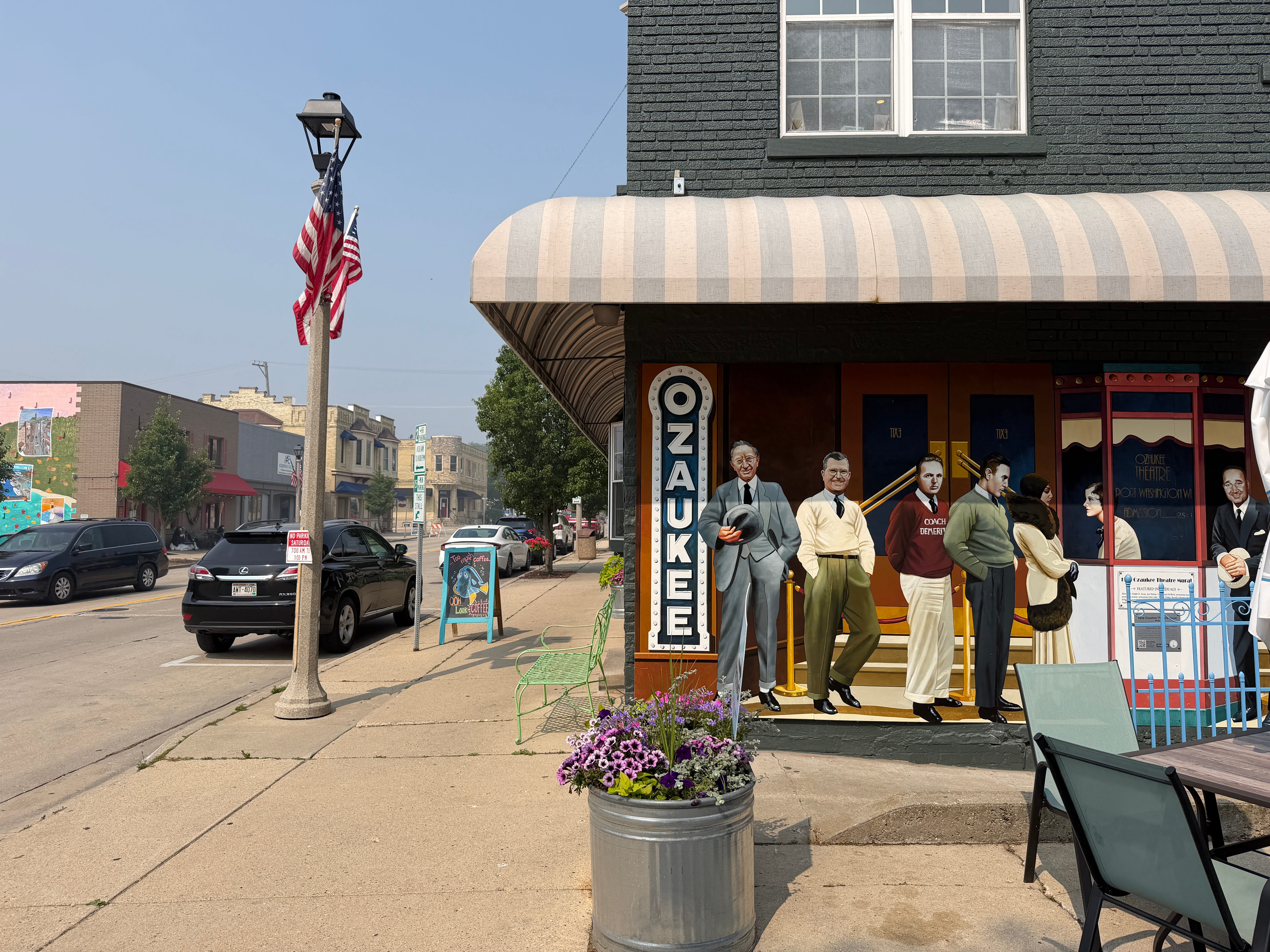
Port is visibly wealthier than Mount Pleasant or Janesville. Its downtown is dotted with new condos, wine bars, and bookstores. I saw my first and only cybertruck of the trip. Well-coiffed yards display signs for Tom Tiffany, the Republican candidate for governor; other signs designate the start and end of the Fish Days parade.
More relevantly, Port is also ground zero for Wisconsin’s data center fights. The mayor, Ted Neitzke IV, has been one of the most vocal pro-data-center voices in the state. But when town residents learned about the incoming development, activists launched a mayoral recall campaign (which failed) and a referendum to require voter approval for future TIDs (which passed with a two-thirds vote). The fight got nasty: the mayor had to bring in police presence after getting hacks and death threats. A protester was arrested and dragged out of a city council meeting by local police.
Everyone in Port has some opinion on the data center, and Fishgiving seems like the perfect place to ask.
Fishgiving is located on Lake Michigan’s shore. Though it’s smoggy from wildfire smoke, there are still seventy-some people sitting out on benches and lawn chairs. There’s a single big line for fried fish and beer; on the stage to the right, an Elvis impersonator belts out oldies in front of a mural of a big American flag.
My group disperses to chat up the locals. We met a 911 operator who has received nonstop calls about construction-related disturbances like dump trucks and bright lights. A jolly civil engineer and alderman takes a break from fry duty to nerd out about municipal finance—he thinks the data center is a great deal, as the TID will fix the town’s aging water filtration plant without the need for loans. A bartender (a Port “lifer”) despises the data center’s infringement on her beloved bird habitats and waterways. Just about everyone was surprised by how quickly the project went up: grassy fields one day, cranes the next. We heard the word “blindsided” again and again.
The next morning, Mayor Ted offered to see us for an interview. He told us two things upon meeting: First, that his name, Theodore, means “gift from God.” Second, that he’d already got word about us slamming down beers at Fish Days. Clearly, this is a small town.
Ted insisted that we get out of city hall and into the streets, so we boarded his Honda for a personal tour. He was born and raised in Port, and waved hello to half the residents we drove past. He’s an expert storyteller—his LinkedIn headline reads “CEO, Podcaster, Mayor”—and clearly media-trained, with his comms guy in the backseat. Downtown, he pointed at each storefront, telling us what it used to be: donut shops, Radio Shack, Beaver’s Candy Store, all gone.
These days, Port’s revenues are reliant on residential property taxes and tourism. Like other deindustrialized Midwestern towns, it lost its commercial economy after manufacturers shut down in the mid-2000s. Ted is dead set on bringing it back. He first tried to attract a chip factory, but the city lost the bid. So when the data center project passed his desk in 2025, Ted was ready to say yes.
Already, the mayor feels like he’s winning. His daughter, a waitress, is thrilled that her tips are up on Mondays due to foot traffic from data center workers. He said Port’s sales tax revenue has doubled from April 2025 to 2026. “Every day people will be flying in from literally around the world to go to that data center. They will be in our hotels, they will be at our restaurants, they will hopefully fall in love with our community and move here,” Ted proclaimed.
He drove us out to the data center site, which lies 15 minutes out of the city core, past bait shops, gas stations, and farms. It’s certainly massive, but also secluded—and from my outsider’s point of view, far less aesthetically offensive than the 100-year-old power plant in the middle of Port’s downtown.
So Ted blames rabble-rousing outsiders for causing the uproar. Charlie Berens, for talking about the Port project at his comedy shows. Activists like Prescott and Sarah, for riling up community members and encouraging them to pack town halls. Journalists for writing ragebait headlines. Social media users for believing them. Ted is certain he will be vindicated by history, even if his constituents don’t realize it yet.
“I don’t know that Teddy Roosevelt would have been able to do what he did if he was worried about what was said to him on Facebook,” he said.
“Knowing what you know now, is there anything you would have done differently to communicate with folks?” I ask.
Ted pauses, brakes, and turns to face me directly. “Nothing.”
My conversations make me wonder if the technical content of data center deals is mostly beside the point. Closed-loop cooling systems? “I don’t believe them.” Paying millions in taxes? “I don’t believe them.” Creating a thousand jobs? “I don’t believe them.” I hear a reflexive skepticism of every claim.
Rather, the way that AI companies engage with communities—forcing NDAs, dangling billion-dollar promises, pushing environmental externalities far away from AI’s wealthy user base—resembles a classic story about dark money in politics. Your politicians are being bought by billionaires and gigantic corporations to screw you over. It’s not Skynet: it’s the oligarchy.
This message was nowhere clearer than at a Lansing rally for Michigan Senate candidate Abdul El-Sayed, featuring Bernie, AOC, and Sunrise cofounder Will Lawrence, a very tall man running for a House seat in Michigan’s District 7.
Lansing Center was filled with an eclectic mix of t-shirt slogans: NO KINGS and UAW FOR ABDUL and SOCIALIST ANGEL. The crowd leaned mostly very young or very old. Someone told me that one of Will’s core campaign planks is a data center moratorium, so I go to ask him about it.
“The proponents of these deals are untrustworthy from the jump. They’re saying, ‘DTE and Consumers Energy have assured us that your rates will not rise,’ which nobody trusts, because they’ve experienced DTE and Consumers raise rates repeatedly,” he said. DTE, Michigan’s monopoly electricity provider, has in fact raised rates four of the last five years, yet has some of the worst outages in the country. Its PAC has given millions to the governor and state legislators, inspiring a popular citizen ballot initiative to get the money out.
Will continued: “There tends to be a lot of condescension from AI developers. ‘Don’t you folks know you don’t have a lot of money out here? We’ve got a lot of money in California, and you’ve got to get on this train now, or you’re going to lose out on the wave of progress for the 21st century.’ And that pitch lands like a lead balloon.”7
While AI is far from the centerpiece of the rally, it came up in nearly every speech. Bernie dedicated two minutes to decrying AI’s impacts on jobs, privacy, and mental health. He mentioned Mark Zuckerberg to a chorus of boos; the audience booed even louder at the name Elon Musk.
When Abdul stepped onstage, I found myself impressed by his swagger. He’s casual, confident, and knows how to work a crowd. “When DTE spends money to buy a Senate seat, they’re buying a quiet tongue when you lose your power for five days because of a mild storm. When Blue Cross tries to buy a Senate seat, they’re buying the ability to raise your premiums again and again and again. When Big Tech buys a Senate seat, they’re buying a data center in your backyard.”

There’s no time for wonky AI policy talk at the post-rally press gaggle, but Abdul and I sit down the next day for a deeper conversation. He doesn’t smile or make eye contact. He thinks data centers are a plainly bad deal.
“It’s going to be this drone of a building that makes an odd sound all the time and sucks up all the electricity and could poison my water. Okay, what’s the trade-off? The buildout of an industry that everyone’s telling me is going to come for my job. So what is the upside? Well, you can ask meaningless questions and queries to your ChatGPT,” Abdul scoffed.
“The whole thing is just whacked out. It’s the end game of the worst excesses of tech generally: to sell us shit we don’t need, but that a few very, very powerful people have decided can make money.”

Sarah Babbs is a firebrand, and you can tell from her Facebook. She is the most active poster in the “Protect Saline Township - No Data Center” Facebook group. Her digital broadsides are adorned with middle-finger emojis and bleeped-out curses.
When we arrive at Sarah’s home in Milan (pronounced MY-lunn, unless you’re poking fun, in which case you can say it like the Italian fashion capital), she’s smoking a cigarette on the porch in a sloth t-shirt and pajama pants. Two of her friends and co-organizers, Jill and Laura, were on their way.
“You have the nicest outfit, so you can sit in the clean chair,” she told me, and I suddenly feel self-conscious about showing up to farm country in chiffon. I mumbled an apology about having a meeting in Ann Arbor. Sarah then showed us a New York Times video about the Saline data center project while she makes coffee and finds more chairs to sit on.
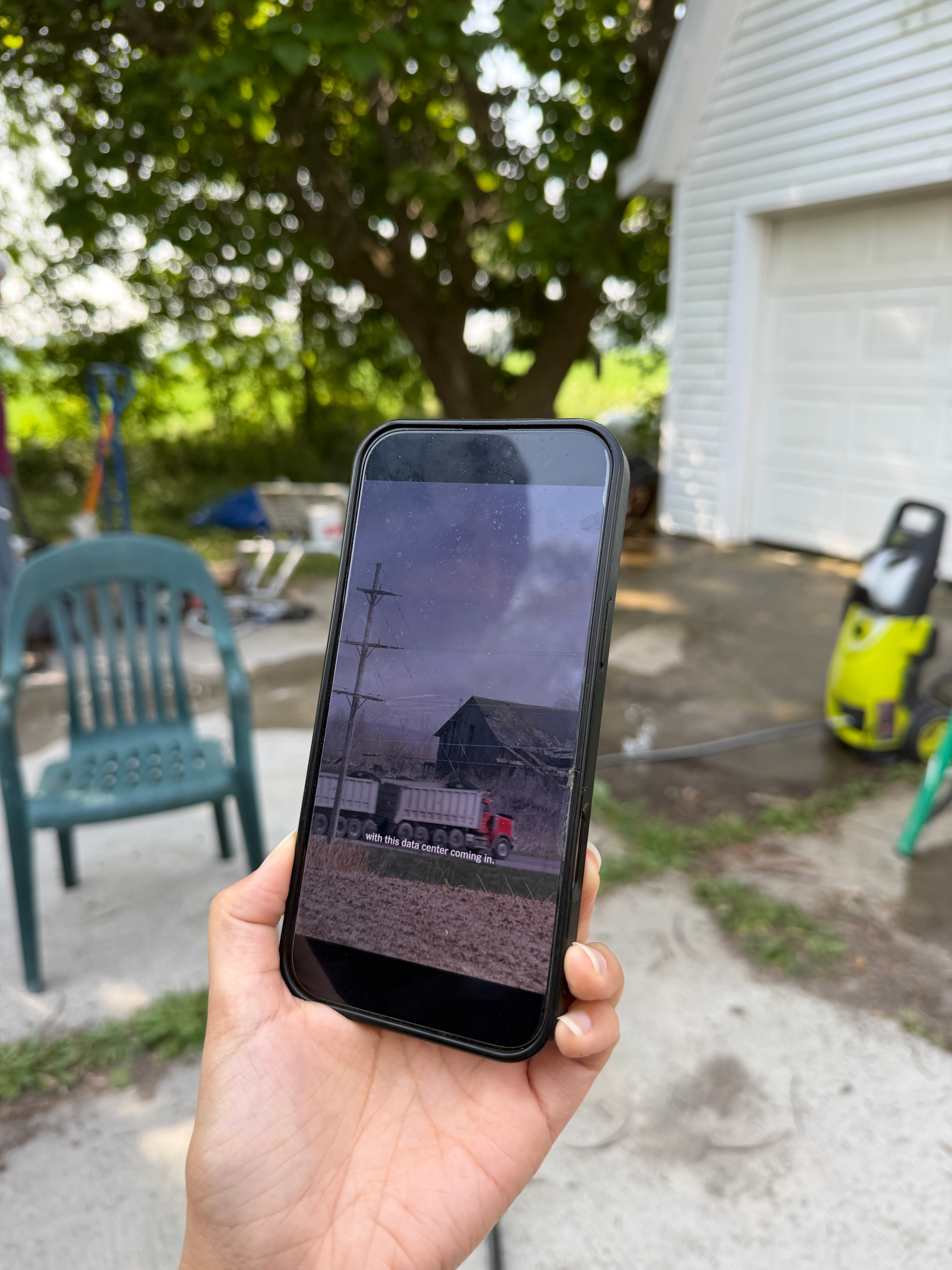
The Saline-Stargate data center saga is not a pretty one. It starts in summer 2025, when data center developer Related Digital attempts to rezone agricultural land to build a data center for two unnamed customers (they turn out to be Oracle and OpenAI). Unlike the Wisconsin cities, where the companies had local officials on their side, Saline Township’s Board of Trustees voted 4-1 against the data center. But rather than finding a new spot, Related sued Saline for exclusionary zoning under state law. Saline, a town of merely 3,000, couldn’t afford the legal battle. They settled for $14 million in community benefits.
The outcry worsened when DTE refused to publish detailed power estimates, redacting documents in public records requests. DTE was also granted expedited review so the project could proceed without formal hearings. The 1.4 GW data center is a 25 percent increase on top of DTE’s total demand—likely requiring new generators and gas plants to supply it.
“I can’t think of anything worse than having a data center—except having a data center and a small modular nuclear reactor next to your kid’s school,” joked Jill.
Sarah—like many others—is worried that AI is a bubble. “They’re not making money, their business model’s failing, their product isn’t even that good,” she contended. In that world, could the AI companies still cover the cost of the grid expansion? Would they build the berms to hide the dirt piles? Would the buildings end up as stranded assets, abandoned like the dead factories, left as waste for her community to clean up? “It feels like supporting what happened right before the 2008 crash.”
The whole thing sounded just like the oligarchy story that Will and Abdul told at the rally: big companies descend on a small town and run roughshod over small-d democracy. Sarah, Jill, and Laura have already lost faith in most politicians to act (with the exception of outsiders like Abdul). It’s up to the little people—the residents of polarized purple Saline—to come together and raise their voice.
For Sarah, who got into politics after the 2016 Trump election, the solidarity is the bright spot in the work. “I’m watching MAGA people coming together with Democratic Socialists and Native American female leaders, healers, and water protectors, and they’re all using words that none of them really recognize, and no one’s getting offended,” she marveled. “They’re kind, they’re open, they’re curious, and they’re pissed off, and they all raise hell in an effective way.”
The lawyers represent the companies. The unions represent the workers. But if the democratically elected local government isn’t listening, the people feel they have no choice but to represent themselves.
So: what is driving the data center fights erupting across America, from rural farmers to feminist academics, from conservative NIMBYs to Bernie bros?
First, the material impacts: AI data centers are big, ugly, noisy, and very energy-hungry. Construction processes are long and locally disruptive. Water consumption and air pollution is generally minimal, but there are exceptions. In a vacuum, most people would choose to live by a flower field over a data center. But these costs are not so different from other industrial developments like manufacturing or solar farms. Those don’t go up without dissent, but have not commanded the shared hatred that data centers have.
Second, process failure. Many people living near data center sites don’t feel that they got a choice. In San Francisco we see how desperate the industry is for compute—atoms still do not scale as seamlessly as bits. That tremendous financial pressure is materializing as fast tracks, fat checks, and limited time for public input. It looks like Big Tech cheating the system, engaging in cronyism and bribery, throwing money bags at politicians and hoping the dollar signs substitute for a positive case.
Third, weak benefits. There is no compelling pro-data-center, pro-AI faction. Charles Franklin, who runs the Marquette Law Poll, emphasized that you only get sentiment this skewed when one side fails to make a case. The AI and utility companies are unsympathetic, permanent workers are not numerous, and most consumers do not feel that AI products are essential to their lives. At least nuclear power and public housing has its advocates (especially among those who live far away). Data centers are hated whether you live near one or not.
Moreover, tax contributions can be delayed, and many in deindustrialized areas aren’t sure if they’ll ever pan out. In the era of the K-shaped economy, being “pro-growth” in the generic has lost its sheen. Several activists assured me they were not anti-technology—I didn’t hear much about specific AI harms—but that an email-writing widget was not worth a data center in their backyard. And more crucially, they did not want their town to be the collateral damage in a few tech billionaires’ pointless ego race. If AI is a bubble, they didn’t want to be part of the pop.
Finally, grievance is amplified by a national environment of historically low trust in corporations and the government. Americans of all parties feel the economy is “rigged” against them; “corruption” and “affordability” regularly rank as top concerns. News articles and viral TikToks teach people to link their local complaints to these bigger political messages: data centers are enriching politicians and billionaires while raising your electric bills. Facebook groups convert solo concerns into social movements. Everywhere in my interviews, people suspected their opponents of being paid off.
You cannot detach the data center backlash from these broader trends in American political culture. “AI populism” is more about populism than about AI.
I ended my trip with a pit stop in New York, where Governor Kathy Hochul had just signed an executive order imposing the nation’s first statewide data center moratorium. It pauses environmental permits for data centers for up to a year.
Initially, I was skeptical. It seemed like there had to be a way to make the data centers boons for many cities. The AI companies have far too much capital and motive for this not to be true; they just need to know what to buy. In that world, a ban leaves billions on the table.
Yet my reporting made clear that the public opposition had reached a breaking point. Local officials everywhere were overwhelmed—some faced recall votes, death threats, and assassination attempts. So the governor stepped in at the state level to slow things down and suggest some standard terms of entry. Early ideas include environmental rules, $1 million in benefits per megawatt, and repealing the state sales tax exemption.
“I’m helping [communities] understand: They want something you have, and you don’t have to go out of your way to attract them,” the governor told me on the phone. She recalled the decaying Bethlehem Steel plant in her hometown of Buffalo. If an industrial facility “consumes our resources, then turns out the lights and walks away, that’s not the future I want.”
Clear, streamlined requirements—if they actually happen—could be attractive to industry too, now that AI developers are taking critics seriously. Microsoft has announced they will stop doing NDAs with local governments. Beyond New York, policymakers are demanding better and clearer benefits deals before saying yes—forget subsidies and maybe-in-ten-years property taxes, let’s get $50k bonuses to teachers now. Ratepayer protection laws are being proposed and passed across the country.
I am fairly optimistic the policy details will get hammered out. But until the deeper cultural problems are addressed, the data center backlash will only recreate itself in other forms. If people are this angry at a building sitting and paying taxes on unused land, something fundamental has gone very wrong.
Back in San Francisco, it is striking how little the AI industry understands its own unpopularity—the reasons that people resist. They ask if it’s a problem of benefits not being generous enough, or else a big misinformation campaign. (By the end of the trip, my friends and I felt slightly ashamed of the caricatures we originally believed in. In general, one should be cautious about assuming your opponents are just reading fake news.)
In Wisconsin and Michigan, sometimes bigger numbers made observers more suspicious. People saw them and thought: I’m being bribed. There must be a catch. It turns out that politics is more than an optimization game; voter interests are neither stable nor reducible to dollar amounts. It is also about thymos: the desire to be “recognized as a human being… with a certain worth or dignity,” who can sacrifice material survival in service of higher ideals. Through Fukuyama’s lens, elections and town halls and social media debates matter not because they are maximally efficient preference aggregators, but because they are “a stage for the expression of thymos”—a place where people make their values heard.8
A backroom data center deal, then, is the negation of thymos. It is corrosive not because it is uneconomical or will make residents worse off in every case, but because it suggests that the demos’s buy-in was never important at all.
Next week in SF, I’m hosting an event about this trip with my tripmate Theo. We’ll be doing a Q&A, drinks, and mixer. Capacity is capped, so registration is limited to paid subscribers. Upgrade and refresh to unlock the link 🔓
Thank you very much to Matthew Sun, Theo Bleier, and Zhengdong Wang for the reporting help, chauffeuring, and friendship9; to Dom and Tony Zappia for selling me on Wisconsin and sharing what you love about the state; to the other journalists whose local reporting I’ve relied on; and to everyone I met on the trip who shared their experiences and welcomed us in. I always come away from reporting loving humanity more, as it’s an endeavor run wholly on the generosity of strangers, and their interest in enriching the public knowledge.
This story was supported by a grant from the Tarbell Center for AI Journalism. Travel costs were supported by Emergent Ventures. I am exploring ways to more sustainably fund similarly ambitious, reported AI storytelling with philanthropy—if you’d like to support, get in touch.


Hit the road this August—
Jasmine
Mythos has changed this conversation.
Andy Masley has done good work on the water issue generally and to clarify some of MPU’s videos specifically. (I actually do think it’s fair to consider environmental harms from data center construction, but they should be signposted as such, compared with other industrial uses, etc.)
That distinction belongs to Virginia, where there are ~653 data centers, or perhaps Texas, hot on its tails with ~510, aided by cheap gas and friendly (i.e. minimal) regulation. Meanwhile, Wisconsin currently has ~53 proposed or active data center projects (rank #24) and Michigan ~79 (#17).
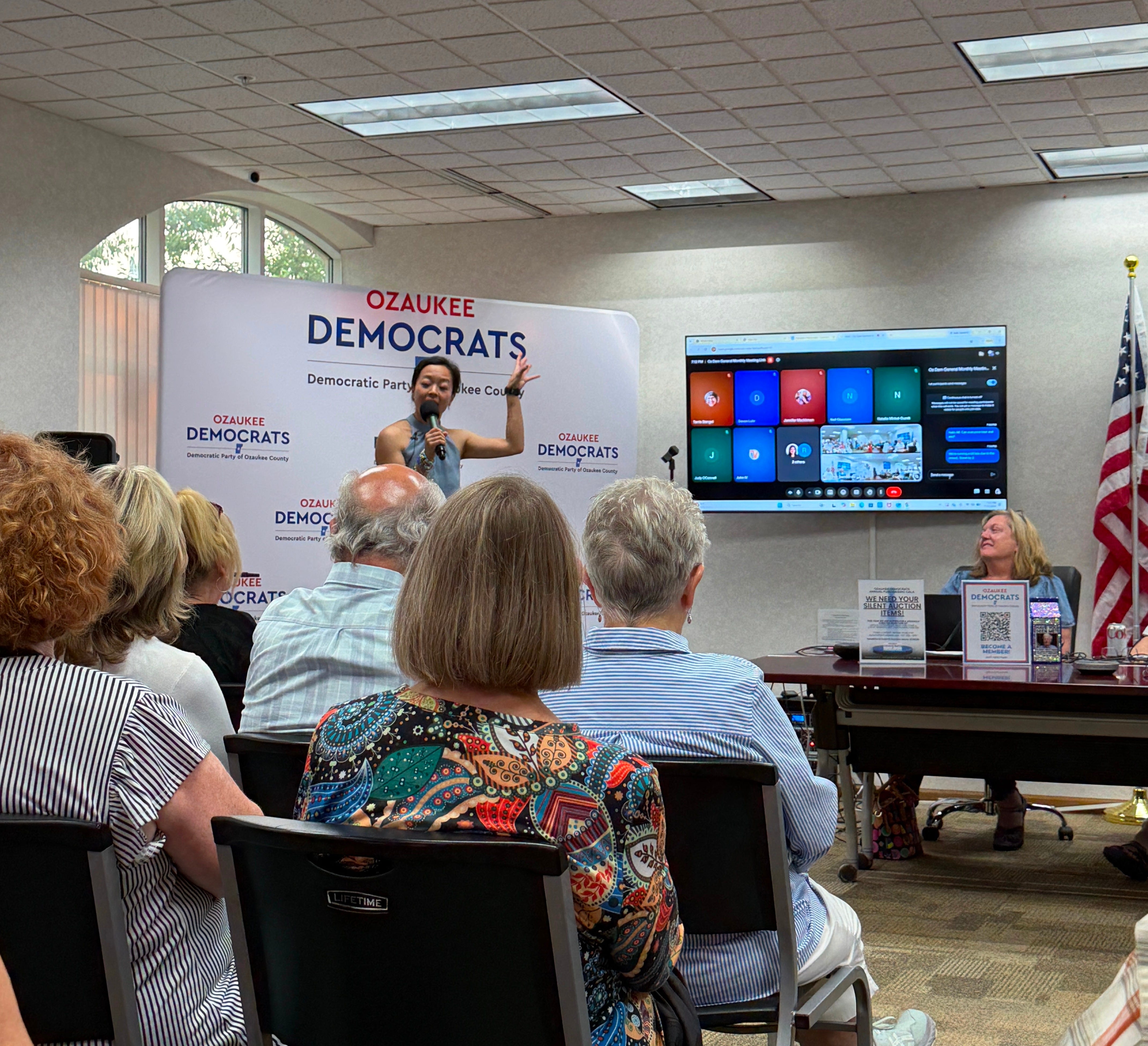
A few days later, we stopped by an Ozaukee County Dems meeting to see Francesca speak. I had high expectations but found it a fairly low-energy event in vibe and substance—mostly a string of 2020 progressive buzzwords.
I did, however, meet a man-bunned, mustached “Hotties for Hong” volunteer who suspected that data centers drained the Great Lakes, and a used car salesman and part-time alderman who was shocked at Port Washington farmers getting “755k for 3/4 acres with a shitty house and no pot to pee in.”
Caledonia trustee Holly McManus felt differently about this fight, wishing they’d at least been able to talk to Microsoft about what benefits they could’ve gotten (e.g. the village is currently planning a new park). “If we don’t do it or if we don’t come to terms on how to make this work, the community right next to us” — that is, Mount Pleasant — “is going to do it. And we’re going to deal with the negative effects of it anyway,” she told me on a call. But the social media polarization made a conversation impossible. Before long, Microsoft had pulled out.
Terry did worry, however, about economic concentration at a macro level:
We have a $30 billion pension fund, and we have a shitload of money stuck in the Magnificent Seven. Seven corporations shouldn't own 50% of our market. That is the only part that really scares me… If they started peeling back, all of a sudden my hiring hall would be filling up with unemployed people, numbers like I never saw before. But I would worry more about the economy, the national economy.
I heard the same sentiment from a HVAC engineer and electrical contracting executive I spoke to. They were all grateful for the work—but nobody knew how long it’d last. Diversification and resilience was on everyone’s mind. “We're growing our business around not only this bubble but the next bubble,” the electrical contractor said.
One of Will’s canvassers told me that when she went door-knocking on Saturday, 90 percent of those she talked to mentioned data centers as a top issue. While data centers are not high-salience for most voters, I think they matter a lot in the neighborhoods where they’re proposed.
For the same reason, many are skeptical of the desirability of UBI in a post-work society: can a welfare check ever satisfy our desire for meaning, dignity, and political voice?
These folks are the “we” in my story. While most anecdotes are ones I personally witnessed, some are based on report-backs from other members.
So what I mainly want to do is just post a string of like 52 confetti emojis, because this was definitely the best single piece of reporting on data centers I've seen anywhere. But I'm going to attempt to push past that urge and highlight the most actionable part of all of this, which I think (as you point out) what the entire dynamic reveals about *thymos* — and specifically, Silicon Valley's complete absence of both skill and interest in cultivating it. I don't think that phenomenon is by any means exclusive to SF; in many ways, we're simply entering the third decade of the 'Unwinding' Packer talks about as we've sorted and polarized the macrosocial/macroeconomic forces that shape America out and away from most of America. The Bay is simply one such force.
But what I think causes data centers to be such a irresistible lightning rod is that they are *mechanically enabled* by this exact dynamic in a way that other forces aren't; the need for land elsewhere is inescapable, the need for electricity from elsewhere is inescapable, the need for information from elsewhere is inescapable, and the impact *on* people elsewhere (totally independent of any direct usage of the technology) is not only tremendous — it's repeated over and over and over again by the most visible Winners of the current 'system'.
Anyway: this was a stellar piece of journalism. Thank you for producing this.
This was a super helpful read because even though people talk about specific points of contention like water usage, noise pollution, etc., those are a facade. It really just comes down to the same ole problem: people far away from huge entities don't trust the huge entities, and the huge entities haven't done a great job enabling such trust. Thanks for your work!